
BLOG & EVENTS

Recent Posts
-
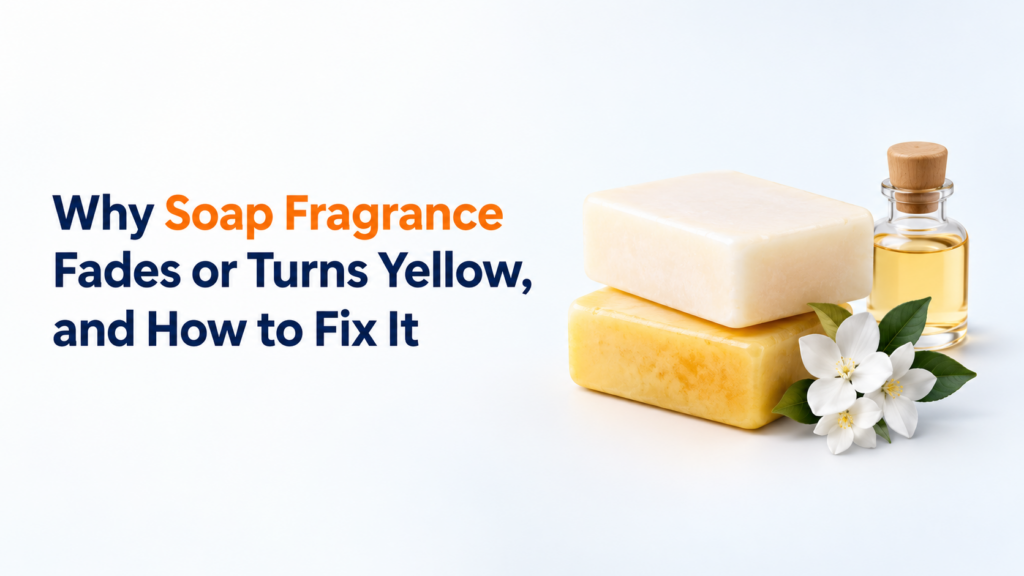 Why Soap Fragrance Fades or Turns Yellow, and How to Fix It
-
 How to Choose an Agarbatti Fragrance Manufacturer in India: 7 Checks Before You Buy
-
 Detergent Fragrance: How It Impacts Laundry Product Quality
-
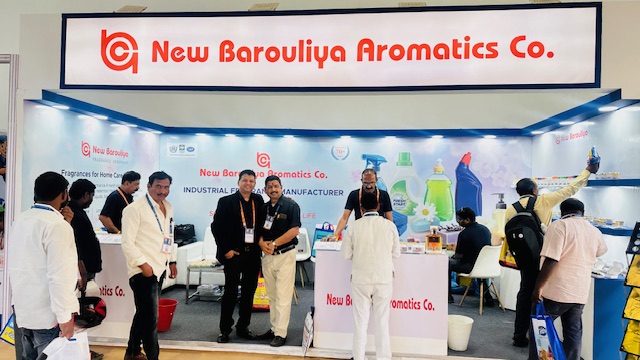 Hyderabad International Soap, Detergent & Cosmetics Expo – February 2026
-
 Fine Fragrance Compounds: What Manufacturers Must Know Before Sourcing
Why Soap Fragrance Fades or Turns Yellow, and How to Fix It
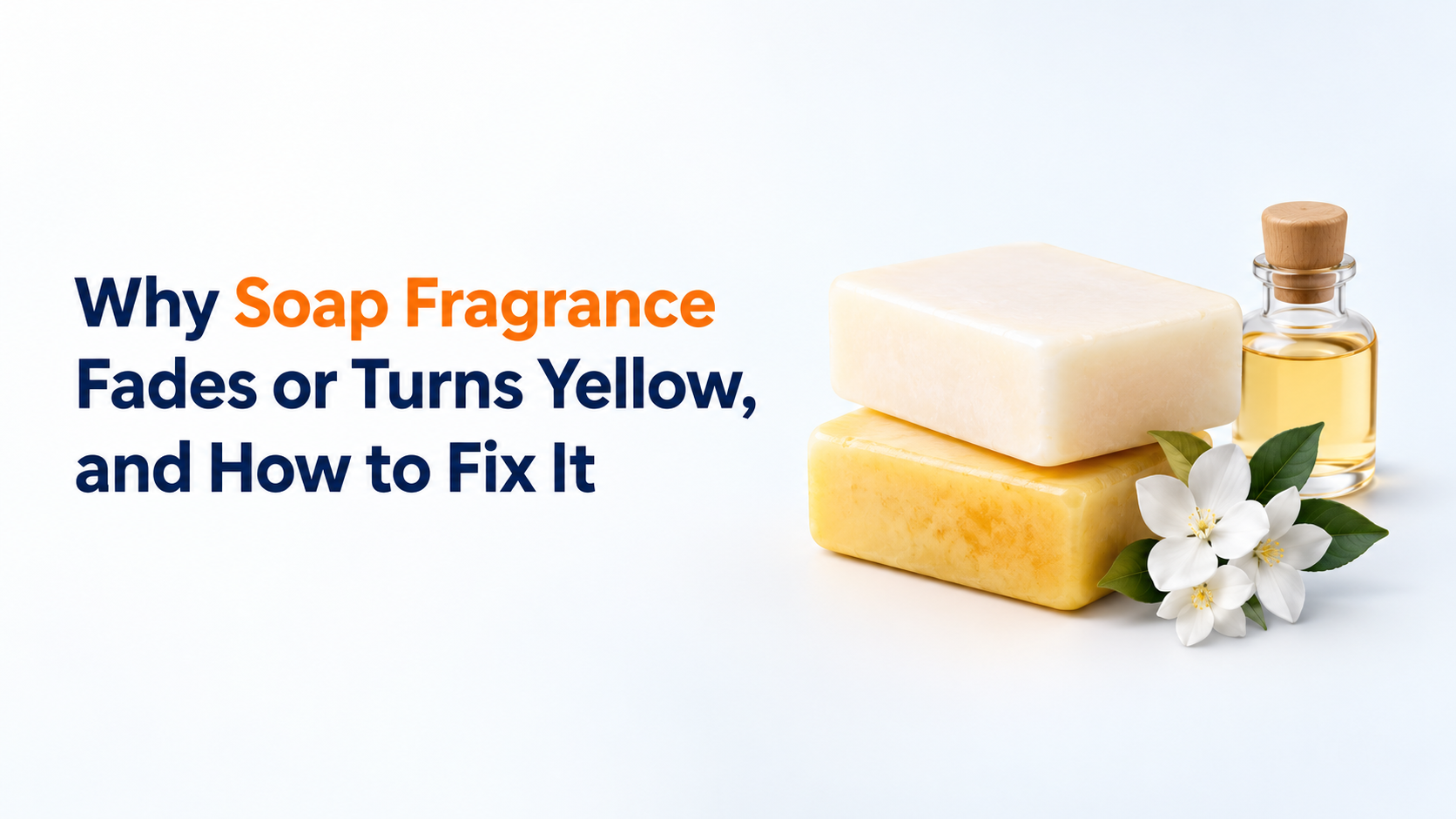
Fragrance plays an important role in how consumers experience a soap. A pleasant scent can make a product feel fresh, premium and memorable. But soap manufacturers sometimes face two frustrating problems: the fragrance becomes weaker over time, or the soap develops an unwanted yellowish colour.
These issues are not always caused by the fragrance alone. The soap base, raw materials, processing conditions, packaging, storage environment and fragrance formulation can all influence the final result. Working with an experienced soap fragrance manufacturer can help identify the cause and develop a fragrance better suited to the finished product.
Why Does Soap Fragrance Fade?
Fragrance fading usually happens when volatile fragrance components gradually evaporate, react with other ingredients or lose their impact during processing and storage.
The soap manufacturing process itself can be an important factor. Heat, exposure to air and interaction with the soap base may affect certain fragrance ingredients. If a fragrance is not properly selected for the application, its original character may become noticeably weaker after production.
Storage conditions can also matter. Prolonged exposure to heat, direct sunlight or unsuitable packaging may accelerate changes in the fragrance profile. Even a well-designed fragrance can perform differently if the finished soap is stored in an unfavourable environment.
This is why fragrance selection should be considered alongside the complete soap formulation rather than treated as a final cosmetic addition.
Why Does Soap Turn Yellow After Adding Fragrance?
Yellowing can have several possible causes, and fragrance ingredients are only one part of the picture.
Certain fragrance materials naturally have a colour or may undergo colour changes over time. Some fragrance components can also interact with ingredients in the soap formulation, contributing to a change in the finished product’s appearance.
Oxidation is another factor worth considering. Exposure to oxygen, heat and light can affect susceptible materials and may gradually alter both fragrance character and colour.
The soap base itself can also contribute to colour variation. Raw material quality, impurities, additives and processing conditions may influence the final appearance.
For this reason, simply replacing the fragrance without investigating the formulation may not solve the underlying problem.
How Can Soap Manufacturers Reduce Fragrance Fading?
The first step is to select a fragrance developed specifically for the intended soap application. A fragrance that performs well in one personal-care product may not necessarily behave the same way in a soap base.
Manufacturers should evaluate fragrance performance in the actual finished formulation rather than relying only on the smell of the concentrated fragrance. This allows potential compatibility issues to be identified before large-scale production.
Appropriate dosage also matters. Increasing the fragrance level does not automatically produce better or longer-lasting results. An experienced fragrance formulator can help determine a suitable level based on the product, fragrance profile and desired performance.
Packaging and storage should also be reviewed. Protecting finished soap from excessive heat, light and unsuitable storage conditions can help preserve both fragrance and appearance.
How Can Yellowing Be Reduced?
If a soap is developing an unwanted yellow tone, manufacturers should investigate both the fragrance and the base formulation.
A useful approach is to compare an unfragranced control batch with the fragranced version under the same conditions. If the colour difference appears only after fragrance addition, the fragrance formulation deserves closer examination. If both versions change colour, the issue may be related to the soap base or another ingredient.
This type of controlled testing can help manufacturers avoid making unnecessary changes and identify the actual source of the problem.
A knowledgeable soap fragrance manufacturer can also assess the fragrance composition and recommend an alternative profile or formulation where appropriate.
Why Fragrance Compatibility Matters
Soap fragrance is not simply about selecting a scent that smells attractive in a sample bottle. It needs to work within a particular chemical and manufacturing environment.
A fragrance manufacturer with industrial R&D expertise can consider the intended application, fragrance character, product formulation and performance requirements together. New Barouliya Aromatics Co. specialises in industrial fragrance solutions for personal care, home care and other applications, with an in-house R&D approach focused on fragrance development and product refinement.
The company also highlights stringent quality-control protocols, expert testing panels and batch consistency as part of its manufacturing approach.
What Should You Test Before Full-Scale Production?
Before approving a fragrance for commercial production, it is sensible to evaluate the finished soap after production and during storage.
Observe the fragrance immediately after manufacturing and again after the product has been stored for an appropriate period. Check whether the scent remains balanced, whether the soap develops an unexpected colour and whether the overall product still meets the intended quality standard.
Testing different fragrance options against the same soap base can also provide useful evidence about which formulation performs most consistently.
This process is particularly valuable when launching a new soap range because correcting fragrance problems after mass production can be significantly more expensive than resolving them during development.
Ready to Improve Your Soap Fragrance Performance?
Fragrance fading and yellowing are often the result of several factors working together. The right solution may involve changing the fragrance formulation, adjusting the dosage, reviewing the soap base, improving storage or evaluating ingredient compatibility.
Choosing an experienced soap fragrance manufacturer gives soap producers access to formulation knowledge, application testing and customized fragrance development rather than simply a catalogue of scents.
New Barouliya Aromatics Co. combines decades of fragrance-industry experience with R&D, quality-focused manufacturing and customized fragrance development for industrial applications. Its expertise spans personal care, home care, fabric care and other fragrance categories.
If your soap is experiencing fragrance fading, unwanted yellowing or inconsistent fragrance performance, discuss your formulation requirements with New Barouliya Aromatics Co. to explore a fragrance solution designed around your product.
