
BLOG & EVENTS

Recent Posts
-
 Custom Fragrance Development for Beauty Brands
 -
 Why Home Care Product Manufacturers Need a Strong Fragrance Strategy
 -
 How to Source Fabric Care Fragrance in Bulk Without Compromising Quality
 -
 Bulk Fragrance Manufacturing in India for Global Brands
 -
 Next-Gen Air Care Fragrances: Trends Driving Growth in India and Globally
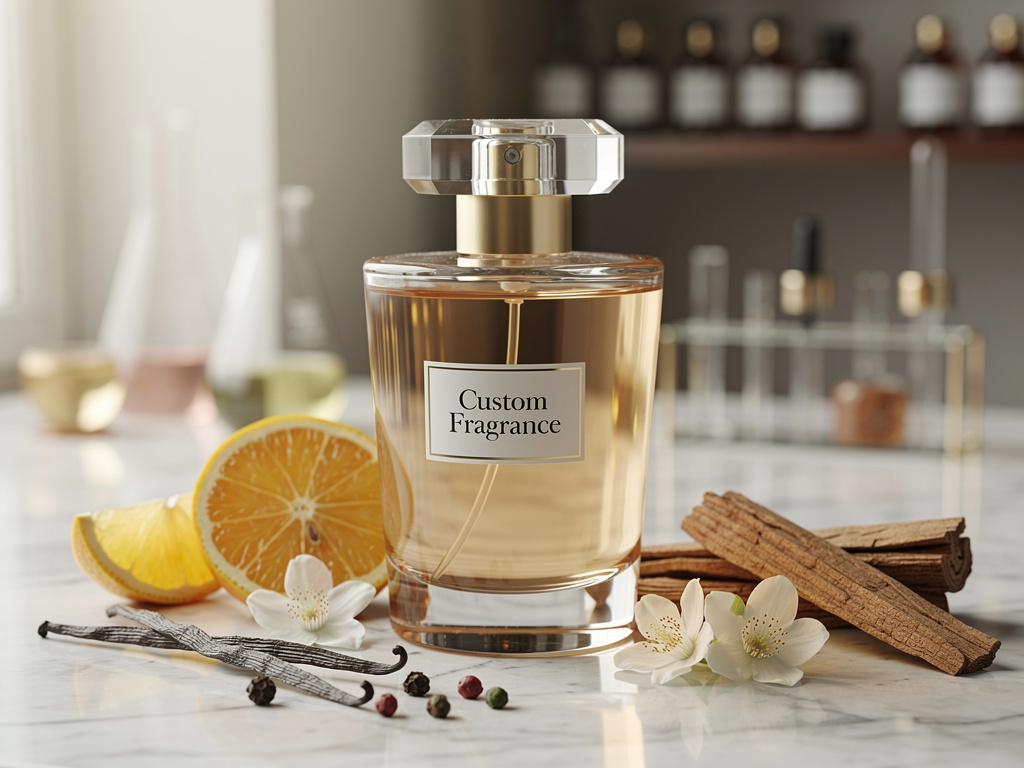
Custom Fragrance Development for Beauty Brands
There is a reason why the world’s most recognized beauty brands are inseparable from their signature scents. The fragrance is not an add-on. It is part of the product’s identity, its promise, and its premium positioning.
For beauty and personal care brands in India, custom fragrance development is increasingly becoming a point of competitive differentiation. When two shampoos sit side by side at retail, both claiming the same benefits, the one with the more distinctive and pleasing fragrance almost always wins the consumer trial and the repeat purchase.
But many brand owners and product manufacturers do not fully understand how custom fragrance development actually works, what the process involves, or how to navigate it effectively.
This guide covers the entire process from brief to final approval, so you can approach custom fragrance development with confidence and clarity.
What is Custom Fragrance Development?
Custom fragrance development means creating a fragrance compound specifically formulated for your brand, your product, and your target consumer. Unlike using an off-the-shelf fragrance that dozens of other brands may also be using, a custom fragrance is exclusive to you.
For beauty and personal care products, this matters for several reasons. First, it protects your brand’s scent identity from being replicated by a competitor who sources the same standard fragrance. Second, it allows the fragrance to be specifically optimized for your product base, whether that is a shampoo, body lotion, face wash, or hair oil. Third, it gives you creative control over how your brand smells, which is a significant brand asset.
Define Your Fragrance Brief
Every custom fragrance begins with a brief. This is the document you share with your fragrance development partner that describes what you are trying to achieve.
A well-written fragrance brief covers the following elements:
Product type and formulation: What is the product? What is the base formulation? Is it a rinse-off product like a shampoo or body wash, or a leave-on product like a moisturizer or hair serum? The formulation type dramatically affects which fragrance compounds will work and which will not.
Target consumer profile: Who will use this product? Age group, gender orientation, lifestyle, and price segment all influence the fragrance direction. A premium women’s body lotion requires a very different fragrance approach than a mass-market men’s shampoo.
Scent direction: This is where many brands struggle. You do not need to know fragrance chemistry to describe scent direction. Use reference scents, mood words, and even colours or images to describe the feeling you want the fragrance to evoke. Fresh and clean? Warm and luxurious? Light and floral? Sharp and energizing? The more specific you can be, the better your development partner can translate this into a fragrance concept.
Usage level estimate: What percentage of fragrance will you be incorporating into the formulation? This affects both cost and the development approach.
Regulatory requirements: Are there specific markets you are targeting? Export markets often have different fragrance safety requirements than the domestic Indian market.
Initial Concept Creation
Once the brief is submitted, your fragrance development partner will create a set of initial fragrance concepts, typically two to four options that interpret the brief from different directions.
These are provided as samples for your evaluation. This is not the final fragrance. It is the starting point for a collaborative refinement process.
When evaluating initial concepts, avoid the common mistake of making judgments based on smelling the raw fragrance oil alone. Always evaluate fragrance samples on the actual product base. A fragrance that smells ideal on a smelling strip may change character significantly once blended into a shampoo base or lotion formulation.
Your feedback at this stage should be specific and directional. Avoid generic responses like ‘not quite right.’ ‘Instead, say, ‘The direction is correct but needs to be lighter in the opening’ or ‘The floral note is too dominant; we need more of the fresh green character.’ Specific feedback accelerates the process significantly.
Iteration and Refinement
Custom fragrance development is rarely a one-round process. Most projects go through two to four rounds of refinement before reaching a final candidate.
This is normal and expected. Each iteration should be moving meaningfully closer to the approved direction. If you are going around in circles after three rounds, it usually means the original brief was not specific enough. Going back to clarify the brief at this stage is better than continuing to iterate without clear direction.
During the refinement process, also pay attention to performance characteristics beyond scent profile. Does the fragrance cause any discoloration in the product? Is the scent stable after one month of storage? Does the product smell different after exposure to heat or sunlight? These are real-world conditions your product will face in distribution and retail.
Stability and Safety Testing
Before a custom fragrance can be approved for production, it needs to pass two categories of testing.
Formulation stability testing verifies that the fragrance remains stable within your specific product formulation over an accelerated testing period. This typically involves storing samples at elevated temperature and humidity conditions and evaluating them at regular intervals.
Safety and compliance testing verifies that the fragrance compound meets IFRA guidelines for the specific product category and any applicable regulatory requirements for your target market. For export-oriented brands, this is particularly important.
A competent fragrance development partner will guide you through both testing requirements and provide the necessary documentation.
Scale-Up and Production Approval
The final step before commercial production is a scale-up trial. The approved fragrance needs to be produced at the scale required for your production run, and a sample from this production batch needs to be compared against the approved lab standard.
Fragrance can behave slightly differently when manufactured at a large scale versus small lab batches due to mixing dynamics, temperature variation, and ingredient interaction times. A production trial approval step ensures that what you approved in the lab is what will go into your products.
Once the production sample is approved and documented, you have a fragrance standard that can be used as the reference for all future deliveries.
How Long Does Custom Fragrance Development Take?
A straightforward custom fragrance development project for a single product typically takes eight to twelve weeks from brief submission to final production approval. Complex projects involving multiple iterations or extensive stability testing can take longer.
Planning your product development timeline with this lead time in mind is important. Brands that treat fragrance development as a last-minute step before launch often end up compromising, choosing an off-the-shelf option rather than completing a custom development they ran out of time for.
The Commercial Value of a Custom Fragrance
Beyond the creative and branding benefits, a custom fragrance has commercial value as a proprietary asset. It cannot be directly replicated by a competitor sourcing from the same supplier. It can be registered as part of your brand’s intellectual property in certain markets. And it provides a consistent, differentiating sensory experience that builds consumer loyalty over time.
For beauty brands positioning themselves for premium retail, export, or private label supply to larger retailers, having a distinct and custom fragrance profile is increasingly a prerequisite rather than an optional extra.
Your Next Step Forward
Custom fragrance development is a structured, collaborative process that delivers significant brand value when approached correctly. With the right development partner and a clear brief, it is well within reach for beauty and personal care brands at any scale. New Barouliya has been developing custom fragrances for personal care and beauty brands across India for over 50 years. Our in-house perfumers and technical team work closely with your product development team from brief to production approval, ensuring your fragrance is not only beautiful but stable, compliant, and consistent at scale. If you are ready to give your brand a scent that is truly your own, contact us today.
