
BLOG & EVENTS

Recent Posts
-
 Bulk Fragrance Manufacturing in India for Global Brands
 -
 Next-Gen Air Care Fragrances: Trends Driving Growth in India and Globally
 -
 Beyond Gender: Redefining Fine Fragrances Without Boundaries
 -
 Where to Buy High-Quality Industrial Fragrances in Bulk India
 -
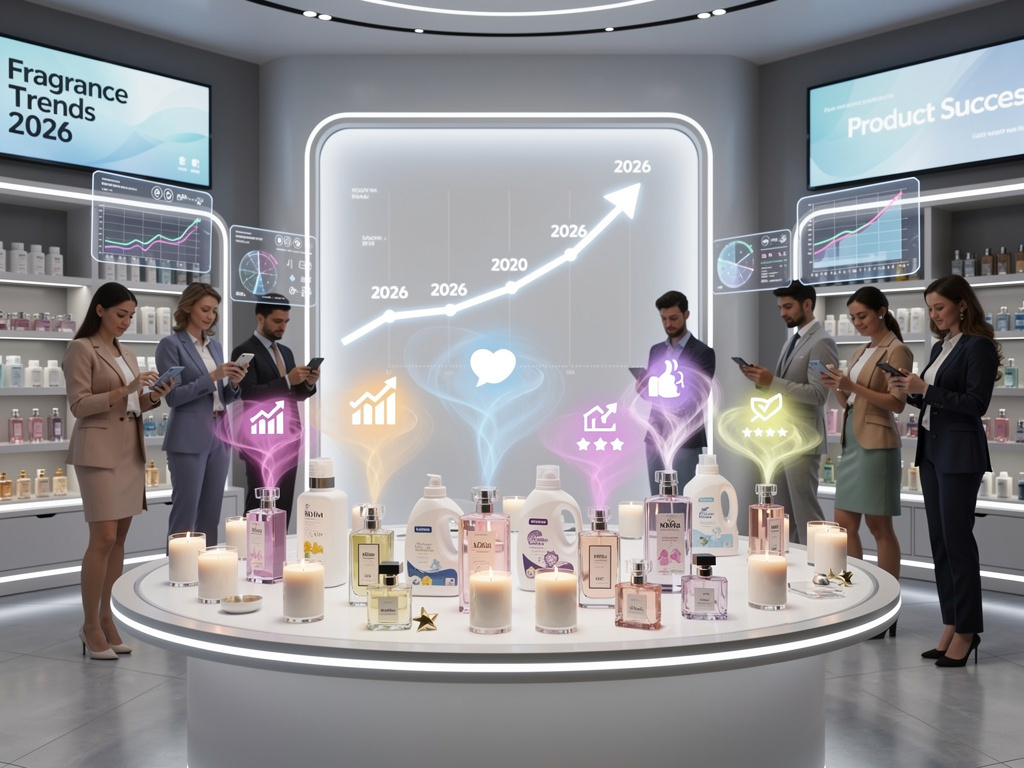 How Fragrance Trends Are Redefining Product Success in 2026
How Fragrance Trends Are Redefining Product Success in 2026
Your product works perfectly. The formulation is solid. The packaging looks premium. But it sits on shelves while competitors with nearly identical specifications move faster.
What’s the difference? Increasingly, it’s fragrance.
Scent has quietly become one of the most influential factors in consumer decision-making across categories—from fabric softeners to premium candles, from personal care to home cleaning products. Yet many manufacturers still treat fragrance as an afterthought rather than a strategic component.
The brands winning in 2026 understand something fundamental: fragrance isn’t just about smelling good. It’s about triggering emotional responses, reinforcing brand identity, and creating sensory experiences that consumers remember and repurchase.
Here’s what’s actually changing in fragrance development right now, and why it matters for your product roadmap.
Why Fragrance Has Become a Strategic Priority
Fifty years ago, fragrance in consumer products served a simple purpose: mask unpleasant base ingredients and add a pleasant scent. That utilitarian approach no longer cuts it.
Today’s consumers are more sophisticated. They recognize fragrance families. They have preferences shaped by personal care routines, home environments, and lifestyle choices. They associate specific scents with quality, efficacy, and brand values.
The business impact is measurable:
Products with well-designed fragrances command price premiums of 15-30% in competitive categories. Repurchase rates correlate strongly with fragrance satisfaction across fabric care and home care segments. Brand loyalty often traces back to sensory memory more than functional performance.
For manufacturers and product companies, this creates both opportunity and pressure. Get the fragrance right, and you build lasting consumer relationships. Get it wrong, and even superior formulations struggle to gain traction.
Transparency in Fragrance Sourcing
The biggest shift happening across the industry? Consumers and retailers are demanding to know what’s in fragrances, not just what they smell like.
Clean beauty movements that started in personal care are now spreading to home care, fabric care, and even air fresheners. Questions about allergens, synthetic versus natural ingredients, and potential health impacts are coming from procurement teams, not just end users.
What this means practically:
Manufacturers need fragrance partners who can provide complete ingredient disclosure. Vague terms like “fragrance” or “parfum” on ingredient lists are increasingly insufficient for export markets and premium retail channels.
The European market already requires detailed allergen declarations. Indian manufacturers targeting international distribution need fragrance suppliers who understand these regulatory frameworks and can provide compliant formulations.
The opportunity:
Brands that lead with transparency rather than responding defensively to these concerns are building trust that translates directly to market share. Your fragrance partner’s documentation capabilities matter as much as their creative formulations.
Wellness-Driven Scent Profiles
Functional fragrance—scents designed to deliver psychological or physiological benefits beyond just smelling pleasant—is moving from niche to mainstream.
Lavender for relaxation, citrus for energy, eucalyptus for respiratory clarity. These associations aren’t marketing fiction anymore. They’re backed by enough consumer research that buyers actively seek them out.
Industry applications:
Home care products are incorporating calming scents for evening-use cleaners and energizing profiles for morning routines. Fabric care brands are developing sleep-enhancing fragrances for bedding products and focus-supporting scents for workspace textiles.
Personal care categories have fully embraced this—stress-relief shower gels, sleep-promoting lotions, and mood-boosting hair care are now standard product lines rather than experimental launches.
For manufacturers:
This trend requires fragrance partners who understand the science behind these claims and can formulate profiles that deliver consistent sensory experiences. It’s not enough to add lavender oil and claim relaxation benefits—the concentration, supporting notes, and delivery mechanism all matter.
Exporters and distributors should note that wellness-positioned products command higher margins and face less price competition than commodity items.
Longevity Becomes a Quality Indicator
Fragrance performance—how long a scent lasts and how it evolves—has become a primary consumer complaint and competitive differentiator.
Consumers expect fabric softener fragrance to last through multiple wears. They want home fragrance that actually fills rooms rather than dissipating in minutes. They judge personal care products partially on scent retention throughout the day.
The technical challenge:
Longevity depends on fragrance chemistry, base formulation compatibility, and delivery mechanisms. It’s not simply about using more fragrance—that often creates overwhelming initial impact followed by rapid fade.
Advanced encapsulation technologies, time-release mechanisms, and carefully balanced note structures all contribute to perceived longevity. These require fragrance suppliers with genuine R&D capabilities rather than just blending operations.
Why this matters commercially:
Products perceived as having poor fragrance longevity generate negative reviews that tank online sales regardless of other qualities. In competitive categories, longevity claims backed by consumer testing create immediate differentiation.
Regional Scent Preferences Demand Localization
India’s fragrance preferences aren’t homogeneous, and treating them as such leaves money on the table.
Northern markets show stronger preferences for floral and musky profiles. Southern regions trend toward fresh and citrus notes. Coastal areas differ from inland markets in acceptable intensity levels and specific note preferences.
For manufacturers with pan-India distribution:
This creates a challenge: do you formulate regionally specific variants or find universal profiles that work across markets? The answer depends on category, price point, and distribution complexity.
Premium brands increasingly opt for regional variants. Mass-market products need fragrances sophisticated enough to appeal broadly without alienating regional preferences.
Your fragrance partner’s India-specific experience matters here. Fifty years of domestic market knowledge beats imported fragrance houses trying to apply global formulas to local preferences.
Sustainable Fragrance Isn’t Optional Anymore
Sustainability in fragrance goes beyond natural versus synthetic debates. It encompasses sourcing practices, biodegradability, packaging impact, and carbon footprint.
The evolving requirements:
Major retailers are implementing sustainability scorecards that include fragrance components. Export markets increasingly require documentation of sustainable sourcing for key ingredients. Government regulations around certain synthetic musks and fixatives are tightening globally.
What product companies need:
Fragrance suppliers who can provide sustainable alternatives without compromising performance. This isn’t about swapping everything to essential oils—it’s about using sustainably sourced ingredients, avoiding problematic compounds, and optimizing concentrations for minimal environmental impact.
The brands winning here aren’t necessarily using “all-natural” fragrances. They’re using thoughtfully formulated profiles where every ingredient serves a purpose and can be defended from sustainability and safety perspectives.
Multisensory Product Experiences
Fragrance increasingly needs to work in concert with visual and tactile elements rather than operating independently.
Practical examples:
Purple-colored products are expected to smell like lavender or berries. Green cleaning products that don’t smell fresh and botanical feel incongruent regardless of actual efficacy. Black-packaged premium items need sophisticated, complex fragrances to match the visual positioning.
This sensory alignment affects perceived quality more than many manufacturers realize. Mismatches between visual cues and scent profiles create subconscious dissonance that translates to lower repurchase intent.
For product development teams:
Fragrance selection needs to happen alongside packaging and formulation decisions, not afterward. The best fragrance partners participate in these discussions early, understanding how scent fits into the complete sensory story.
Gender-Neutral Fragrance Gains Ground
Traditional “for men” and “for women” fragrance positioning is weakening across categories.
Personal care products increasingly use universal profiles rather than heavily gendered scents. Home care and fabric care were never strongly gendered, but new launches avoid even subtle masculine or feminine coding.
Why this shift matters:
It opens market opportunities and simplifies SKU management. One well-designed universal fragrance can serve broader audiences than separate gender-specific variants, improving production efficiency and inventory management.
The challenge is creating profiles sophisticated enough to appeal across preferences without becoming bland. This requires fragrance expertise—understanding which notes work universally and which inadvertently skew gendered.
Nostalgia-Driven Scent Design
Consumers facing uncertain times increasingly gravitate toward comforting, familiar scents that trigger positive memories.
Industry manifestations:
Traditional Indian fragrances—mogra, rose, sandalwood—are being reimagined in contemporary products. Childhood-associated scents like talcum powder, camphor, and specific flower varieties are appearing in premium personal care lines.
Incense and candle categories have seen strong growth in heritage-inspired fragrances that connect urban consumers to cultural and family memories.
For manufacturers:
This trend creates opportunities for India-specific products that differentiate from global brands. It requires fragrance partners who understand these cultural scent associations and can translate them into stable, commercially viable formulations.
Exporters targeting diaspora markets find particular success with these profiles—they connect emotionally in ways generic international fragrances cannot.
Customization and Limited Editions
Mass customization technology is making limited edition and seasonal fragrance variants economically viable even at moderate volumes.
Practical applications:
Fabric care brands launching monsoon-specific fragrances. Home care products with festival-aligned scents. Personal care lines offering seasonal variants that create urgency and trial.
These approaches increase shelf visibility, generate social media content, and allow price testing at premium levels without committing to permanent SKU expansion.
The requirement:
Fragrance suppliers capable of rapid development cycles and flexible minimum order quantities. Traditional fragrance houses with six-month lead times and high MOQs can’t support this approach.
Performance Testing Becomes Standard
Consumer perception of fragrance performance varies widely from technical measurements. Bridging this gap requires actual use testing, not just lab analysis.
What’s changing:
Leading manufacturers are conducting fragrance performance testing under real-world conditions before finalizing formulations. Does the fabric softener fragrance actually last through a typical wear cycle? Does the air freshener perform in actual room sizes, not just testing chambers?
This reveals issues that lab testing misses—fragrance interaction with other product ingredients, performance variation across water hardness levels, real-world environmental factors.
For product companies:
Partner with fragrance suppliers willing to support iterative testing and reformulation. The cheapest fragrance quote rarely delivers the best market performance.
Regulatory Compliance Gets Complex
Fragrance regulations are fragmenting globally, creating compliance challenges for manufacturers targeting multiple markets.
EU regulations differ from US requirements. Middle Eastern markets have specific restrictions. Domestic Indian regulations are evolving. Export-focused manufacturers need fragrance partners who track these changes and formulate accordingly.
The practical concern:
A fragrance perfect for the domestic market might contain ingredients restricted in export destinations. Discovering this after packaging and marketing investment is expensive.
Proactive fragrance suppliers provide regulatory guidance during development, not just compliance documentation afterward.
Digital Scent Marketing
While you can’t smell through screens yet, digital marketing around fragrance has become sophisticated.
Current approaches:
Scent description language that triggers sensory memory. Video content showing fragrance testing and reactions. Influencer partnerships focused on scent experiences rather than just product features.
For manufacturers, this means fragrance profiles need clear, marketable stories. Complex fragrances with describable note progressions create better digital content than generic “fresh scent” products.
Your fragrance partner’s ability to articulate scent profiles in consumer-friendly language becomes a marketing asset, not just technical documentation.
What These Trends Mean for Your Product Pipeline
Understanding trends is valuable. Implementing them strategically separates market leaders from followers.
The manufacturers succeeding in 2026 aren’t just adding fragrance to products—they’re using scent as a strategic tool for differentiation, premium positioning, and consumer connection.
This requires fragrance partners who function as collaborators rather than just suppliers. Partners who understand your market positioning, target consumers, and competitive context. Partners who can translate trends into commercially viable formulations.
Partner With Fragrance Expertise That Delivers Results
Fragrance trends will continue evolving, but one principle remains constant: excellence in fragrance development requires deep industry experience, technical capability, and genuine understanding of market dynamics.
At NewBarouliya, we’ve spent over five decades mastering fragrance formulation across every major product category. Our expertise spans fabric care, home care, personal and beauty care, incense and candles, air care, and fine fragrance—giving us category-specific insights that specialist suppliers simply cannot match.
We don’t just follow trends. We help shape them. Our Mumbai-based R&D facility combines traditional Indian fragrance knowledge with modern formulation technology, creating profiles that resonate in domestic markets while meeting international standards for export-focused manufacturers.
For product manufacturers: We provide fragrance solutions that enhance your formulations rather than just filling a line item. Our technical team works alongside yours to ensure fragrance compatibility, stability, and performance.
For product companies: We offer the flexibility you need—from large-scale production runs to limited edition variants. Our 50+ years of supplier relationships ensure raw material consistency regardless of global supply chain disruptions.
For exporters and distributors: We understand regulatory requirements across major markets. Our compliance documentation supports your market access rather than creating barriers.
Our legacy isn’t just about longevity—it’s about continuous evolution. We’ve adapted through five decades of industry transformation because we invest in understanding what drives product success, not just what smells pleasant.
When competitors struggle with fragrance longevity, we deliver lasting performance. When sustainability becomes mandatory, we already have certified alternatives. When regulations tighten, we’ve reformulated proactively rather than reactively.
With proven formulations, unmatched industry experience, and India-focused market knowledge, we consistently deliver fragrance solutions that create competitive advantages our competitors cannot replicate.
If you’re developing products that need to stand out in 2026’s competitive landscape, partner with fragrance expertise that has been refining formulations since before your competitors existed.
Contact NewBarouliya today. Let’s discuss how strategic fragrance development transforms your product pipeline from commodity to premium.
